Ukraine Energy Kickback Scandal: $100 Million Embezzlement Probe Exposes Systemic Graft, Draws International Scrutiny
The probe, dubbed "Midas," involved 70 searches across Kyiv and other regions, detaining five suspects and charging seven with money laundering, illicit enrichment, and abuse of power.
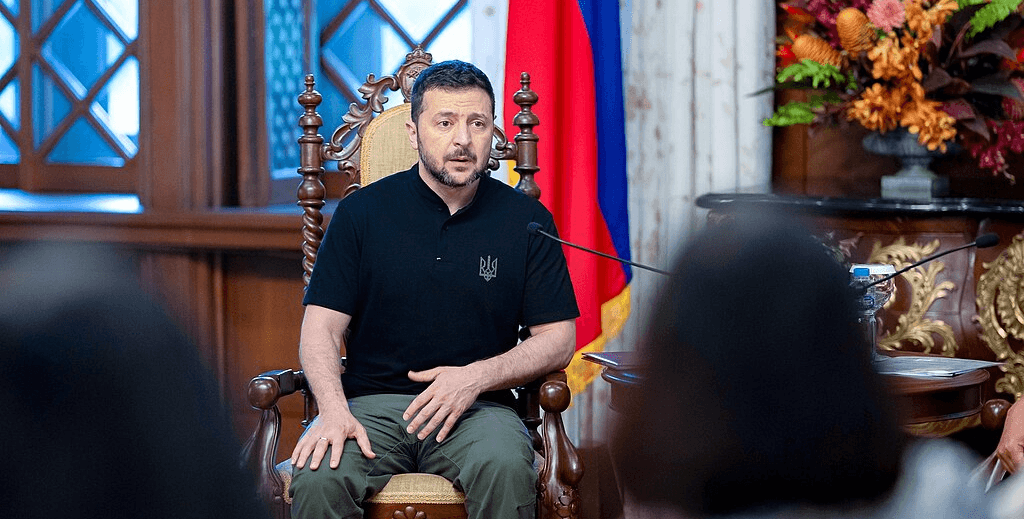
Ukraine's National Anti-Corruption Bureau (NABU) unveiled a $100 million embezzlement scheme on November 10, 2025, alleging a network of officials and businessmen siphoned funds from state-owned Energoatom, the nuclear power giant supplying over 50% of the country's electricity. The probe, dubbed "Midas," involved 70 searches across Kyiv and other regions, detaining five suspects and charging seven with money laundering, illicit enrichment, and abuse of power. NABU described it as a "criminal organization" that extracted 10-15% kickbacks from contractors building protective infrastructure against Russian missile strikes, laundering proceeds through a secret Kyiv office.
At the scandal's core is Timur Mindich, a co-owner of Kvartal 95—the production company President Volodymyr Zelensky co-founded before entering politics—and a close Zelensky associate. Prosecutors from the Specialized Anti-Corruption Prosecutor's Office (SAPO) accused Mindich of orchestrating the scheme, influencing Energoatom contracts to favor allies and blocking payments to non-compliant firms. Audio recordings released by NABU capture Mindich and others discussing the operation on July 9, 2025, treating the war-battered energy sector as a personal "laundromat." Former Deputy Prime Minister Oleksiy Chernyshov, codenamed "Che Guevara" in intercepts, allegedly received $1.43 million, while ex-Energy Minister German Galushchenko—suspended November 12 and resigned November 13—benefited personally from rigged deals.
The scandal, unfolding amid Russia's intensified attacks that have destroyed 50% of Ukraine's power capacity since March 2024, has crippled the grid with rolling blackouts affecting 80% of households. Energoatom, which operates four nuclear plants generating 55% of electricity, awarded $1.2 billion in contracts for defenses like anti-drone systems and substations; investigators claim $100 million vanished through inflated bids and fictitious services. NABU's 15-month inquiry, involving 1,000 hours of recordings, exposed the network's ties to Zelensky's inner circle, prompting his November 16 decree for a full Energoatom management overhaul and asset freezes on Mindich and associate Oleksandr Tsukerman.
Zelensky pledged transparency on November 16, stating, "Everyone who has been involved in corruption schemes must receive a clear legal response," and instructing officials to cooperate with NABU and SAPO. He sacked Energy Minister Svitlana Grynchuk on November 13 and suspended Justice Minister Galushchenko, whose role in overseeing probes raised conflict concerns. Zelensky's summer 2025 attempt to curb NABU and SAPO independence—via a bill placing them under the prosecutor general—sparked massive protests and EU backlash, forcing reversal; the current scandal underscores those agencies' resilience.
International reaction has been swift and pointed, amplifying Ukraine's corruption challenges amid $200 billion in Western aid since 2022. EU foreign policy chief Kaja Kallas called it "extremely unfortunate" on November 12, urging "full accountability" to safeguard EU accession talks, where anti-graft reforms are a benchmark. Finnish President Alexander Stubb, during Zelensky's November 16 Athens visit, pressed for rapid resolution, warning it "plays into Russia's hands" while praising wartime leadership. U.K. Prime Minister Keir Starmer, meeting Zelensky on November 10, emphasized "zero tolerance," tying it to continued military support. The U.S. State Department echoed demands for "thorough investigation" on November 11, with Ambassador Bridget Brink noting it "undermines public trust" in aid allocation.
Fallout has deepened domestic fissures. Opposition leader Petro Poroshenko's European Solidarity party demanded a no-confidence vote on November 14, labeling it a "wartime mafia network." Public outrage, fueled by blackouts and $6 billion in winter repair needs, has eroded Zelensky's approval from 70% in 2024 to 52% in October 2025, per Kyiv International Institute of Sociology. The scandal risks stalling a €50 billion EU loan package, as Brussels reviews graft indicators quarterly.
No direct links to Hunter Biden's past Burisma dealings emerged in the probe, though the energy sector's opacity recalls 2014-2019 controversies. Burisma, where Hunter served on the board from 2014-2019 earning $83,333 monthly despite no sector experience, faced corruption probes under prosecutor Viktor Shokin, fired in 2016 amid U.S.-led anti-graft pressure. Senate reports and 2020-2023 investigations found no Biden wrongdoing, but the firm's owner Mykola Zlochevsky was charged in 2020 with $6 million in bribes—unrelated to this case. Energoatom's scheme highlights persistent vulnerabilities in Ukraine's $20 billion energy market, where state firms like Naftogaz lost $10 billion to graft from 2014-2020, per NABU data.
Zelensky's reforms, including a new Energoatom supervisory board by November 23, aim to restore credibility, but experts warn of entrenched interests. As winter bites with 8-hour daily cuts, the scandal tests Kyiv's resilience, with EU and U.S. tying $61 billion in 2025 aid to verifiable anti-corruption steps.
Like this article