Trump Directs Navy to Escort Tankers if Needed, Offers Insurance to Secure Gulf Energy Flows
The Strait of Hormuz, a critical chokepoint through which about 20% of global oil and a third of liquefied natural gas pass, has seen reduced traffic since Iran declared it closed and fired on transiting vessels.
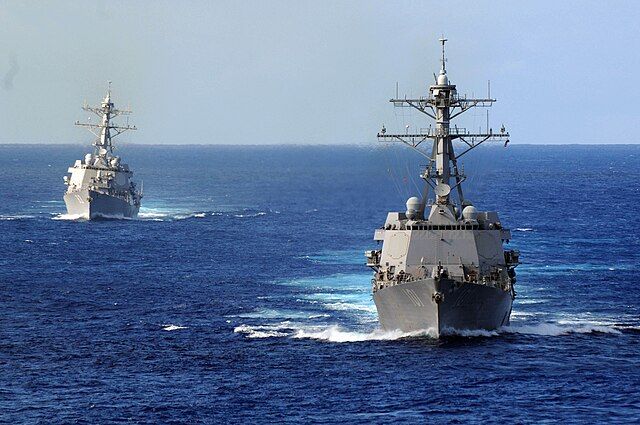
WASHINGTON – President Trump announced Tuesday that the U.S. Navy stands ready to escort oil and gas tankers through the Strait of Hormuz if required, while directing the U.S. International Development Finance Corporation (DFC) to provide political risk insurance for maritime trade in the Gulf, addressing Iranian threats to disrupt global energy supplies amid the ongoing military action.
In a Truth Social post, Trump stated, “Effective IMMEDIATELY, I have ordered the United States Development Finance Corporation (DFC) to provide, at a very reasonable price, political risk insurance and guarantees for the Financial Security of ALL Maritime Trade, especially Energy, traveling through the Gulf. This will be available to all Shipping Lines. If necessary, the United States Navy will begin escorting tankers through the Strait of Hormuz, as soon as possible.” The measures aim to mitigate risks from Iran's vows to target vessels, following attacks on several ships in the region.
The Strait of Hormuz, a critical chokepoint through which about 20% of global oil and a third of liquefied natural gas pass, has seen reduced traffic since Iran declared it closed and fired on transiting vessels. Shipping sources indicate many tankers are rerouting around Africa, adding weeks to voyages and elevating costs. Trump's initiative provides financial safeguards against potential losses from attacks, encouraging continued use of the strait under U.S. protection.
Secretary of State Marco Rubio previewed the plan Monday, noting it would counter oil price spikes triggered by the conflict. Brent crude futures fell slightly after the announcement, trading around $75 per barrel, down from recent highs above $80 amid supply concerns. U.S. gasoline prices, already above $3 per gallon, could stabilize with assured flows, benefiting consumers and industries reliant on affordable energy.
The U.S. Navy maintains a presence in the Middle East with about 12 warships, including an aircraft carrier, positioned to support escort operations. This echoes historical efforts like Operation Earnest Will in the 1980s, when U.S. forces protected tankers during the Iran-Iraq War. Analysts suggest the move deters further Iranian aggression while preserving global trade stability, potentially averting broader economic disruptions.
These steps underscore the administration's focus on energy security as part of the broader strategy to neutralize Iran's nuclear and missile threats without prolonged engagement. To date, the military action—entering its sixth day—has involved over 2,000 strikes achieving air superiority, degrading key facilities, and eliminating senior regime figures, prompting Iranian retaliations including drone strikes on the U.S. Embassy in Riyadh and missile attacks on Gulf allies, with six American service members killed. Reinforcements continue, with Trump projecting four to five weeks of targeted operations to protect U.S. and allied interests.
Like this article