Supreme Court Temporarily Reinstates Texas' Redrawn Congressional Map for 2026 Elections
Lawmakers passed the new map on August 21 by party-line votes, signed by Abbott on August 25, creating 18 majority-Hispanic districts (up from 13) while shifting boundaries to favor Republicans in five competitive seats, potentially flipping them from Democratic hands.
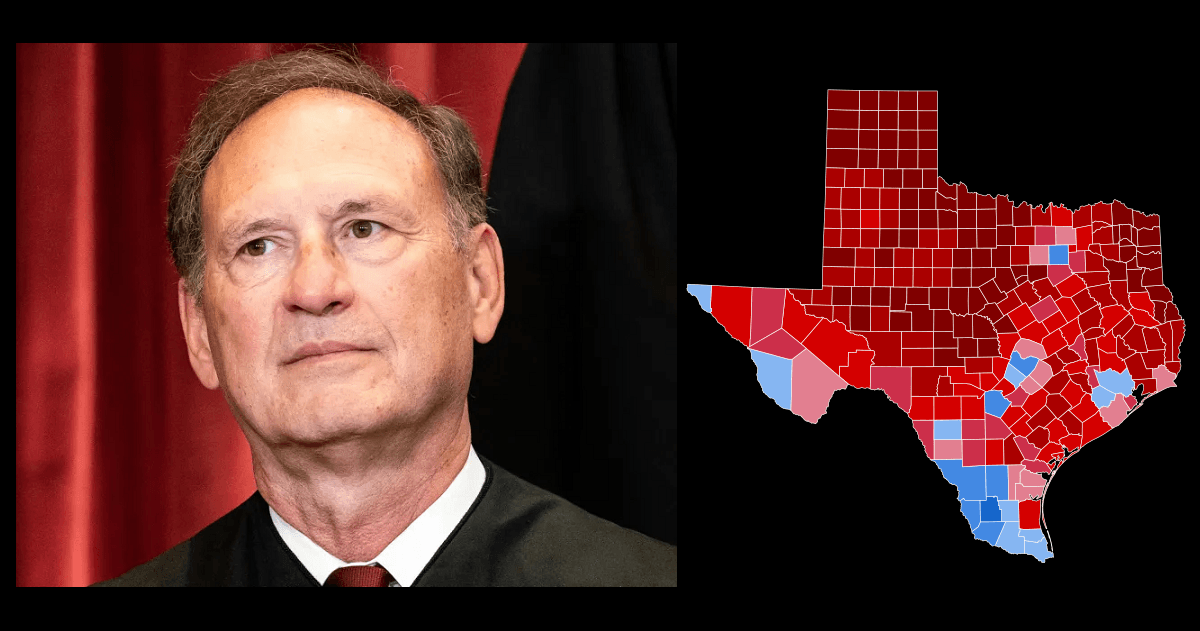
The U.S. Supreme Court granted Texas' emergency application on November 21, 2025, temporarily staying a lower federal court's order that had blocked the state's newly redrawn congressional map, allowing Republicans to use the 2025 boundaries for the 2026 midterm primaries. Justice Samuel Alito, the circuit justice for the Fifth Circuit, issued the administrative stay pending further review, directing responses from challengers by November 24 at 5 p.m. ET. The move preserves the map's use for candidate filing deadlines on December 8, averting chaos in a process that could add five Republican House seats.
The redistricting battle began in July 2025 when President Trump urged Texas Republicans to redraw maps mid-decade—the first such effort since Reconstruction—to bolster GOP control of the House, where they hold a narrow 220-215 majority. Texas Attorney General Ken Paxton announced on July 15 that the state would convene a special session, citing the 2021 map's alleged dilution of minority voting power under the Voting Rights Act. The DOJ, under Trump's administration, sent a July 20 letter to Gov. Greg Abbott, demanding elimination of four "coalition districts" lacking a single racial majority, which Paxton called "factually and legally riddled with errors" but used as leverage for a special session starting August 5.
Lawmakers passed the new map on August 21 by party-line votes, signed by Abbott on August 25, creating 18 majority-Hispanic districts (up from 13) while shifting boundaries to favor Republicans in five competitive seats, potentially flipping them from Democratic hands. The map adjusts for population growth since 2020, adding 3 million residents mostly in suburbs, and aims to protect incumbents like Rep. Tony Gonzales (R-Texas) in El Paso by redrawing his district to 55% Hispanic. Critics, including the Mexican American Legislative Caucus, argued it cracked Latino influence in urban areas to preserve rural GOP strongholds.
A coalition of civil rights groups, including the Mexican American Legal Defense and Educational Fund and the Texas Civil Rights Project, sued on August 28 in the Western District of Texas, alleging racial gerrymandering under the Equal Protection Clause. The three-judge panel—U.S. District Judges Jeffrey Brown (Trump appointee) and David Guaderrama (Obama appointee), with Fifth Circuit Judge Jerry Smith (Reagan appointee) dissenting—ruled 2-1 on November 18 that "substantial evidence shows Texas racially gerrymandered the 2025 map." Brown wrote that race predominated over neutral criteria like compactness, citing legislative records where Democrats were told to "redistrict based on race" to comply with the DOJ letter. The court ordered use of the 2021 map, drawn by an independent commission after 2020 Census data.
Texas appealed immediately, filing an emergency application to Alito on November 19, arguing the panel overreached by second-guessing legislative intent and ignoring Rucho v. Common Cause (2019), which bars federal courts from partisan gerrymandering claims. Paxton stated, "The Legislature redrew our congressional maps to better reflect Texans' conservative voting preferences—and for no other reason." The state contends the map complies with Voting Rights Act Section 2 by creating opportunity districts for Hispanics, who comprise 40% of the population, without packing or cracking.
From here, challengers must respond by November 24, with Alito potentially extending the stay or referring it to the full Court. Full briefing could lead to oral arguments in January 2026, with a decision by March—after Texas primaries on March 3 but before general elections. If affirmed, the 2021 map would stand; reversal would validate the 2025 version, aiding GOP efforts to gain seats in a state where Republicans hold 25 of 38 districts. This case, part of a mid-decade wave affecting 10 states, highlights tensions between partisan strategy and racial fairness, with the conservative-majority Supreme Court likely to scrutinize the DOJ's role in prompting the redraw.
Like this article