President Trump's Asia Tour So Far: Historic Peace Deal and Strategic Trade Victories
Building on his historic Middle East peace achievements, this tour advances American interests by forging strategic partnerships to reduce reliance on Chinese supply chains, showcasing a game-changing strategy that prioritizes national security and prosperity.
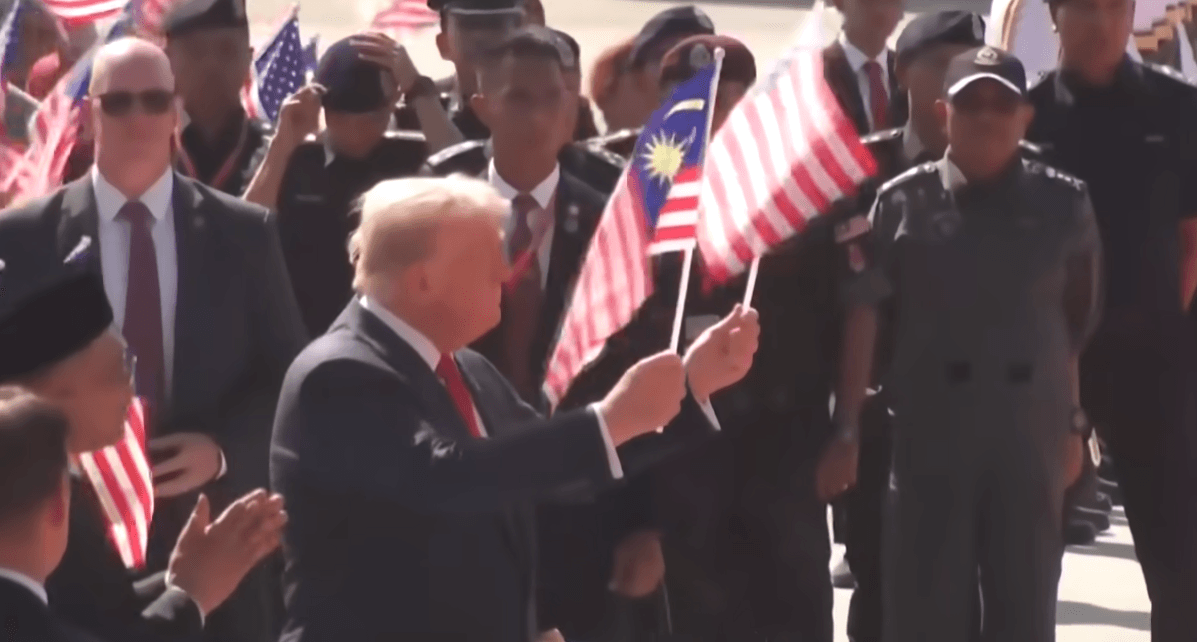
President Trump's third major foreign trip of his second term, launched on October 24, 2025, continues his transformative approach to trade and foreign affairs, delivering bold diplomatic and economic victories that strengthen U.S. leadership in the Indo-Pacific. Building on his historic Middle East peace achievements, this tour advances American interests by forging strategic partnerships to reduce reliance on Chinese supply chains, showcasing a game-changing strategy that prioritizes national security and prosperity.
The journey began with a late-evening departure from Washington, D.C., aboard Air Force One, bound for Asia amid high expectations for trade negotiations and regional stability. En route, the presidential aircraft made a refueling stop at Al Udeid Air Base in Qatar on October 25, where President Trump held a brief but productive meeting with Qatar's emir, Sheikh Tamim bin Hamad Al Thani, and Prime Minister Sheikh Mohammed bin Abdulrahman Al Thani. Aboard the plane, discussions focused on Qatar's mediation role in Gaza ceasefire efforts, with President Trump expressing gratitude for Doha's contributions to de-escalating regional tensions. This unscheduled engagement underscored Qatar's growing partnership with the U.S. in fostering Middle East peace, building on recent successes there.
Arriving in Kuala Lumpur, Malaysia, on October 26, President Trump received a ceremonial welcome befitting his stature, including a state dinner hosted by Malaysian Prime Minister Anwar Ibrahim. The visit marked a high point with the immediate signing of a long-sought peace agreement between Cambodia and Thailand, resolving border disputes that had simmered for decades. Brokered through U.S. facilitation, the deal includes joint economic zones and demilitarized buffers, promising enhanced stability and trade flows in Southeast Asia. President Trump hailed the accord as a "monumental step toward lasting peace," crediting collaborative diplomacy that prioritizes mutual prosperity.
Beyond peace initiatives, the Malaysia stop yielded a series of trade pacts with Southeast Asian nations, emphasizing diversification of critical supply chains. In a series of bilateral meetings, President Trump secured agreements with Malaysia, Thailand, and Cambodia for cooperation on rare earth minerals and other essential resources. These deals commit the partners to joint exploration, processing facilities, and export frameworks aimed at reducing U.S. dependence on China, which controls over 90% of global rare earth production. The pacts, valued at billions in potential investment, include U.S. technical assistance for sustainable mining and streamlined tariffs on American goods entering these markets.
The rare earths agreements caught Beijing off guard, effectively bypassing China's perceived leverage in the sector. Just days earlier, China had imposed export curbs on rare earths in retaliation for U.S. tariffs, a move intended to pressure Washington. The swift U.S. pivot to alternative suppliers prompted a noticeable shift in China's rhetoric. On October 26, Chinese state media outlets described the U.S. deals as "constructive steps toward mutual benefit," while Foreign Ministry spokespeople signaled openness to resuming comprehensive trade talks. This evolving tone aligns with a preliminary "framework" agreement outlined in pre-trip negotiations, paving the way for a potential Trump-Xi Jinping summit. Analysts attribute the change to the strategic erosion of China's monopoly, forcing Beijing to prioritize dialogue over confrontation.
As of early morning US time on October 27, President Trump has departed Malaysia for Tokyo, Japan, the next leg of the nearly weeklong tour. In Japan, scheduled from October 27 to 29, he will engage with Prime Minister Shigeru Ishiba on defense cooperation, including enhanced missile defense sharing and joint exercises in the East China Sea. Economic discussions will center on expanding U.S. LNG exports to Japan and collaborative semiconductor production to counter Chinese dominance.
Following Japan, the itinerary proceeds to Seoul, South Korea, for meetings with President Yoon Suk Yeol on October 30-31, focusing on trilateral U.S.-Japan-South Korea security frameworks and trade barriers in electric vehicles. A potential extension could include a rendezvous with North Korean leader Kim Jong Un, though no firm plans exist. The tour culminates with a possible meeting with Xi Jinping in Beijing around November 1, where finalizing a broader U.S.-China trade framework—encompassing tariffs, intellectual property, and market access—remains a top priority.
President Trump is expected to return to Washington on November 3, 2025, concluding a journey that has already fortified alliances, secured economic safeguards, and positioned the U.S. advantageously in global trade dynamics. The trip exemplifies a proactive foreign policy that delivers tangible wins for American workers and security.
Like this article