A Comprehensive Look at President Trump's 6 Day Asia Trip: Securing Historic Trade Deals and a Peace Agreement
The trip marked the President's most extensive engagement with the Asia-Pacific region since returning to office and resulted in concrete economic and security commitments from key American allies.
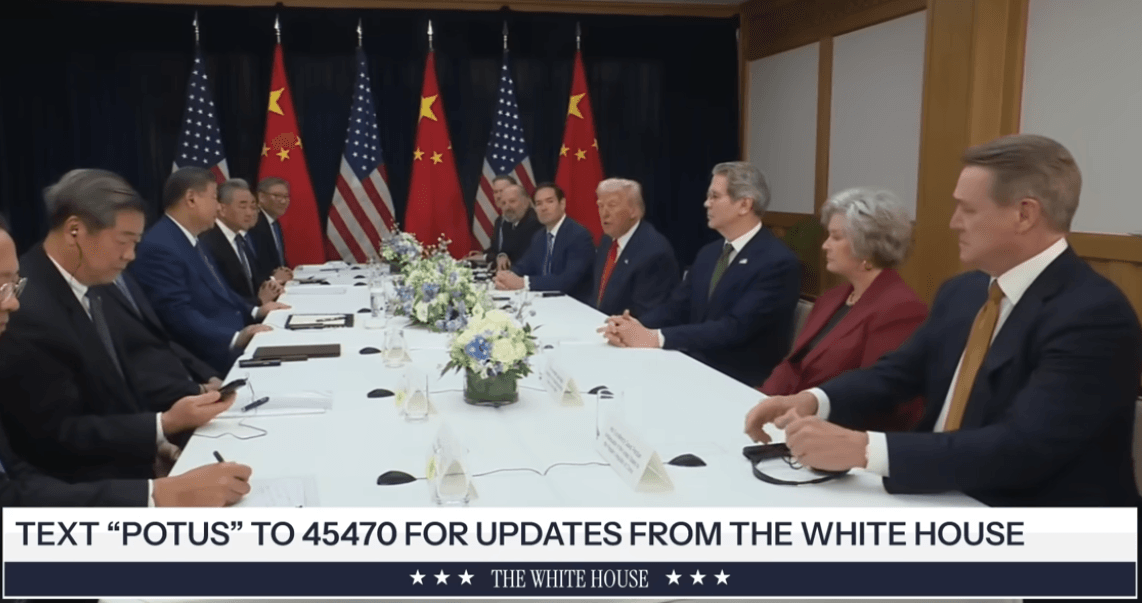
President Donald Trump concluded a six-day diplomatic mission to Asia on October 30, 2025, returning to Washington after securing billions of dollars in trade agreements, brokering a peace accord between two Southeast Asian nations, and achieving a breakthrough in relations with China. The trip marked the President's most extensive engagement with the Asia-Pacific region since returning to office and resulted in concrete economic and security commitments from key American allies.
Departure and Qatar Stopover
President Trump departed from the White House aboard Air Force One on the evening of October 24, beginning what would become one of the most consequential foreign trips of his presidency. During a refueling stop at Al Udeid Air Base in Qatar, the President held an unscheduled meeting with Qatar's Emir and Prime Minister aboard Air Force One. The closed-door discussion occurred as the presidential aircraft prepared for the long journey to Southeast Asia.
Malaysia: ASEAN Summit and Peace Diplomacy
President Trump arrived in Kuala Lumpur, Malaysia, on the morning of October 26 for the 47th Association of Southeast Asian Nations (ASEAN) Summit, his first attendance at the regional gathering since 2017 and the first visit by an American president to Malaysia in a decade. The President was greeted by Malaysian Prime Minister Anwar Ibrahim, who served as host for the three-day summit.
In his opening remarks to ASEAN leaders, President Trump stated his mission was "of friendship and goodwill and to deepen our ties of commerce, to strengthen our common security and to really promote strongly stability, prosperity and peace for all of the countries in this room and long beyond this room."
The centerpiece of the Malaysia visit came on October 26 when President Trump and Prime Minister Anwar co-hosted the signing of the Kuala Lumpur Peace Accords, a diplomatic achievement that formally ended border tensions between Thailand and Cambodia. The agreement included provisions for establishing border observer teams and Thailand's release of 18 detained Cambodian soldiers. President Trump personally brokered the peace declaration, bringing together the prime ministers of both nations for the signing ceremony.
Beyond peacemaking, President Trump secured substantial economic agreements during the Malaysia stop. The United States and Malaysia unveiled a comprehensive trade pact valued at an estimated $150 billion, covering semiconductors, aerospace components, and data center equipment. A separate Memorandum of Understanding on critical minerals established frameworks for cooperation on rare earth elements and supply chain diversification.
Under the critical minerals agreement, Malaysia committed to refrain from imposing export bans or quotas on critical minerals and rare earth elements destined for the United States. The agreement also included provisions to combat forced labor, enforce environmental laws, and address non-tariff barriers. The United States maintained 19% reciprocal tariffs on most Malaysian exports as part of the arrangement.
President Trump also oversaw the signing of a reciprocal trade deal with Cambodia, which agreed to eliminate all tariffs on American goods, including food, agricultural products, and industrial goods. Cambodia further committed to recognizing U.S. regulatory oversight to prevent burdensome additional testing requirements for American exports.
Additionally, the President announced framework agreements with Thailand and Vietnam. The Thailand agreement focused on critical minerals cooperation, including provisions for technology transfer, capacity building, and the development of domestic processing industries. The Vietnam framework provided for the elimination of Vietnamese tariffs on almost all American goods while maintaining a 20% U.S. reciprocal tariff rate, with certain products eligible for zero-percent tariffs.
During a private conversation in the presidential limousine, Prime Minister Anwar raised the Gaza conflict with President Trump, emphasizing the need for a comprehensive peace agreement addressing Palestinian interests. President Trump also participated in the 13th annual U.S.-ASEAN Summit meeting during his time in Kuala Lumpur.
Japan: Imperial Audience and Alliance Strengthening
President Trump arrived in Tokyo on October 27, where he was received by Japanese Emperor Naruhito at the Imperial Palace. The two leaders met for approximately 30 to 35 minutes in what marked their second meeting, having previously met in 2019 when President Trump became the first world leader to meet Emperor Naruhito following his enthronement ceremony.
On October 28, President Trump held formal bilateral talks with Japan's Prime Minister Sanae Takaichi at the State Guest House, Akasaka Palace. The meeting included a salute and guard of honor ceremony, a summit meeting, a signing ceremony, and a working lunch. Prime Minister Takaichi, who had recently assumed office, faced her first major diplomatic test in the high-stakes negotiations with President Trump.
The discussions produced a landmark trade and investment agreement. Japan pledged $550 billion in investments for American projects, with commitments spanning energy, artificial intelligence infrastructure, power development, and critical minerals. Companies identified for participation included SoftBank Group, Mitsubishi Electric, Murata Manufacturing, Panasonic, and Mitrachem. The investment package combined direct investments, loans, and loan guarantees supporting Japanese firms' projects in the United States, with Japan required to review and finance White House-selected projects within 45 business days.
In exchange for the massive investment commitment, the United States agreed to impose 15% tariffs on imported Japanese goods, a significant reduction from previously threatened higher rates. The agreement also included Japan opening its market to American rice, automobiles, and defense equipment. A framework for cooperation on critical minerals and rare earth metals was established, and Japan committed to increased purchases of U.S. soybeans, natural gas, and pickup trucks.
The leaders signed an agreement affirming the "golden age" of the U.S.-Japan alliance. Prime Minister Takaichi presented President Trump with a putter previously used by former Prime Minister Shinzo Abe and a golf bag signed by professional golfer Hideki Matsuyama. She also indicated her intention to nominate President Trump for the Nobel Peace Prize.
Following their meetings, President Trump and Prime Minister Takaichi traveled via the presidential helicopter Marine One to the U.S. Naval Base Yokosuka, where they visited the aircraft carrier USS George Washington. Prime Minister Takaichi delivered remarks aboard the carrier, emphasizing her determination to ensure a Free and Open Indo-Pacific and to elevate the Japan-U.S. Alliance to new heights.
South Korea: APEC Summit and Historic Meetings
President Trump arrived in South Korea on October 29 for the Asia-Pacific Economic Cooperation (APEC) meetings held in the southeastern city of Gyeongju. The President held bilateral talks with South Korean President Lee Jae Myung, resulting in another substantial trade and investment agreement.
At a ceremony held at the Gyeongju National Museum on October 29, President Lee presented President Trump with South Korea's highest honor, the Grand Order of Mugunghwa, making him the first American president to receive the decoration. President Trump was also presented with a specially gilded replica of the Silla-era Gold Crown from Cheonmachong, a significant cultural artifact from Korean history.
The Trump-Lee summit produced a comprehensive trade deal under which South Korea committed to invest $350 billion in the United States. The investment package included $200 billion in cash, to be paid in installments capped at $20 billion per year, and $150 billion designated for shipbuilding cooperation. In a significant technology transfer agreement, the United States agreed to share nuclear submarine technology with South Korea, with the vessel expected to be constructed at the Philly Shipyard, which had been acquired by South Korea's Hanwha Group. Additionally, tariffs on South Korean automobile exports were reduced from 25% to 15%.
The Xi Jinping Summit: Breakthrough with China
The most closely watched event of President Trump's Asia tour occurred on October 30 in Busan, South Korea, where he met with Chinese President Xi Jinping on the sidelines of the APEC Economic Leaders' Meeting. The nearly two-hour meeting represented the highest-level engagement between the two nations amid ongoing trade tensions.
President Trump characterized the meeting as a "12 out of 10" success, stating the leaders "agreed to almost everything." The discussions produced several concrete outcomes addressing the most contentious issues in U.S.-China relations.
On trade, President Trump agreed to lower overall tariffs on Chinese goods from 57% to 47%, specifically reducing fentanyl-related tariffs from 20% to 10%. The reduction came in response to President Xi's commitment to take steps to stop the flow of fentanyl to the United States, including efforts to disrupt money-laundering networks tied to gangs involved in fentanyl chemical trafficking.
China agreed to lift its limit on rare earth mineral exports for one year, with the United States scaling back its own export restrictions in response. China also committed to repurchase American soybeans, addressing a key concern of U.S. agricultural producers.
The leaders discussed Russia's war in Ukraine, though they did not delve deeply into the issue of Russian oil purchases. Taiwan and a potential TikTok deal were not addressed during the meeting. President Xi emphasized that China's focus remained on its economic growth and stated that China had no intention of challenging any other country.
Both leaders agreed to continue their dialogue, with President Trump planning to visit China in April 2026 and President Xi expected to visit the United States thereafter.
While President Trump participated in bilateral meetings during the APEC gathering, U.S. Treasury Secretary Scott Bessent represented the United States at the formal APEC Economic Leaders' Meeting scheduled for the final days of the summit.
Return to Washington
President Trump departed South Korea on Thursday, October 30, boarding Air Force One for the return journey to Washington. The six-day trip concluded with the President having secured trade and investment commitments totaling well over $1 trillion from Asian allies, brokered a peace agreement ending a military conflict, and achieved a significant de-escalation in trade tensions with China.
The Asia tour represented a comprehensive engagement with the region, touching on economic cooperation, security partnerships, and diplomatic conflict resolution. The agreements reached during the trip established frameworks for ongoing cooperation on critical minerals, technology transfer, and market access, while the personal diplomacy displayed in meetings with Emperor Naruhito, multiple prime ministers, and President Xi demonstrated the administration's commitment to direct, leader-to-leader engagement on the world stage.
Like this article